Home › Asphalt Sealcoating & Crack Filling
Protect your driveway investment with professional asphalt sealcoating in Jacksonville, FL. Our team cleans the surface, seals cracks, and applies a uniform protective coat that resists UV rays, water, and oil stains. Regular maintenance keeps your asphalt looking fresh and can significantly extend its service life.
Precision Asphalt Jacksonville provides professional asphalt sealcoating throughout Jacksonville, FL, Florida and the surrounding area. Our licensed, insured crew delivers safe, clean, on-time work with a free estimate before anything begins. Call (904) 817-0896 or request your free quote.
Asphalt Sealcoating & Crack Filling in Jacksonville, FL
Jacksonville pavement takes a beating from sun, rain, and temperature swings. Without protection, asphalt dries out, cracks, and ruts early. Precision Asphalt Jacksonville focuses on asphalt sealcoating and crack filling that is tailored to North Florida conditions, not just a one-size-fits-all coating.
Our crew seals and repairs driveways, parking lots, private roads, and commercial loading areas across Jacksonville and the Beaches. We use commercial-grade sealer and hot rubber crack fillers that are designed for high UV exposure and frequent rain, which are both everyday realities here. The goal is simple: slow down oxidation, keep water out of the base, and extend the life of the pavement you already paid for.
On this page you will see exactly how we prep, repair, and seal, what affects your cost, and what you should look for in a bid before you hire anyone to work on your asphalt in Jacksonville, FL.
How We Sealcoat Jacksonville Asphalt (Step by Step)
Successful asphalt sealcoating is 80 percent preparation and 20 percent material. Precision Asphalt Jacksonville follows a set process so the coating bonds to your pavement and does not peel or track.
1. Site walk and layout: We walk the entire area with you, note drainage issues, oil spots, and structural failures. For commercial lots, we review traffic patterns and operating hours so we can phase work and keep access open.
2. Cleaning the surface: We mechanically blow and broom all pavement, then use steel wire brooms on edges and cracks. On heavily soiled areas, we may pressure wash and allow extra drying time. Dirt or mildew left under sealer is the most common cause of early failure in Jacksonville’s humid climate.
3. Oil and stain treatment: Gas and oil spots get treated with an oil spot primer so the sealer will adhere. If an area is badly saturated, we may recommend cutting out and patching instead of just sealing.
4. Edge detailing: Hand cutting around buildings, curbs, gates, and landscaping keeps sealer where it belongs. We tape or shield concrete if you want a clean separation line.
5. Application method: For residential driveways and smaller lots, we usually apply sealer by squeegee or a squeegee and spray combination for better penetration and even coverage. Larger commercial lots are typically spray-applied with calibrated equipment, then back-brushed as needed around drains, transitions, and entrances.
6. Number of coats: Most Jacksonville driveways receive one heavy coat. High traffic commercial lots, drive lanes, and dumpster pads often get two coats, applied in opposite directions after the first is fully dry.
7. Curing and barricades: We set up cones and tape and advise realistic reopening times based on humidity, temperature, and sun exposure. In Jacksonville’s summer humidity, we typically recommend at least 24 hours before vehicle traffic, sometimes longer for shaded or low airflow areas.
Professional Crack Filling: Stopping Water Before It Wrecks the Base
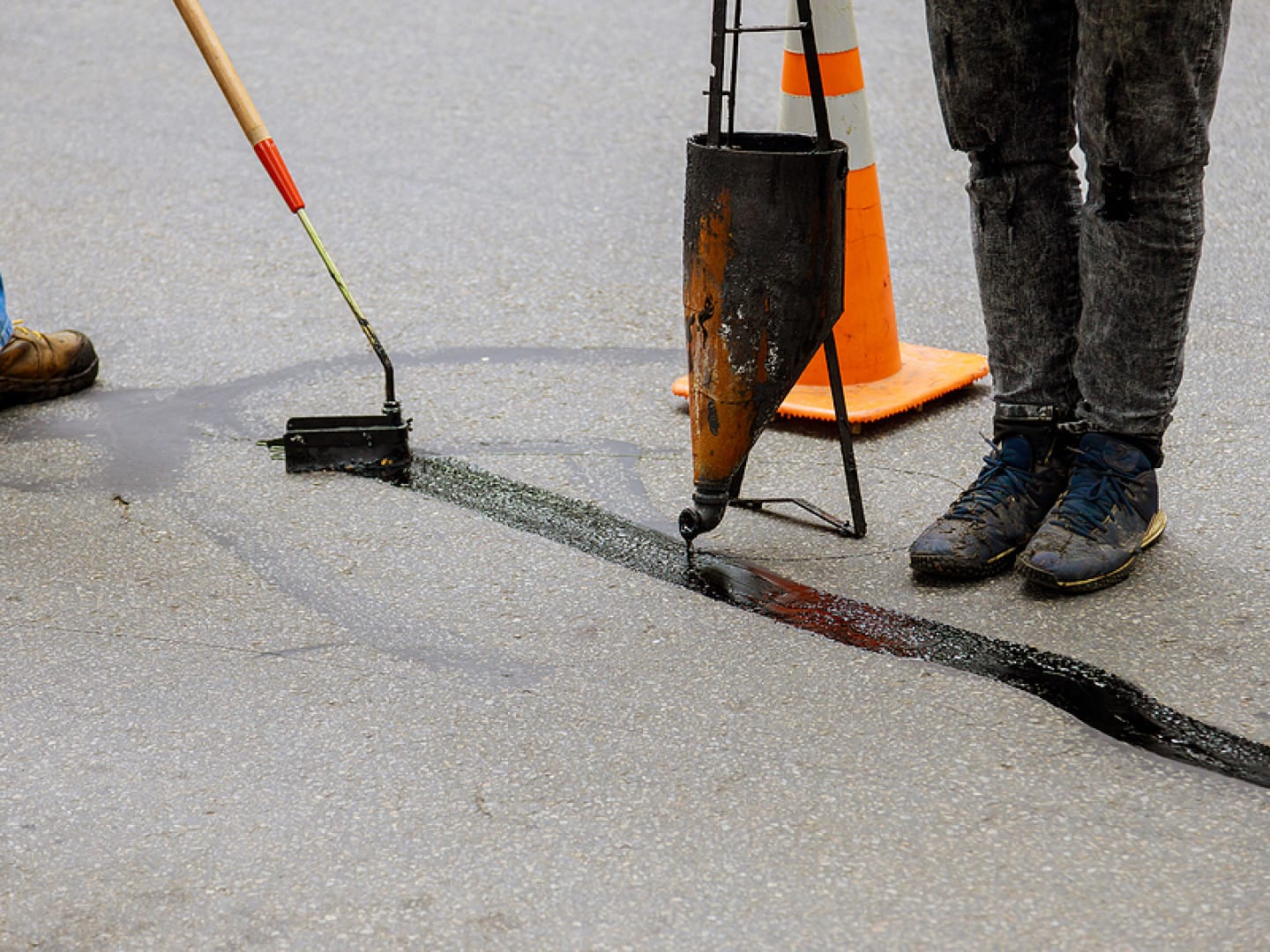
Crack filling is not cosmetic. Once water gets into the base underneath your asphalt, you start to see dips, potholes, and edge failures. Precision Asphalt Jacksonville focuses on getting cracks sealed correctly before we think about the black finish.
We start by identifying crack types. Narrow, linear cracks that follow joints or shrinkage patterns are usually candidates for hot rubber crack filling. Alligator or spider web cracking is a sign of base failure and is not suitable for simple crack fill. Those areas may require patching or overlay, which we will explain and price separately.
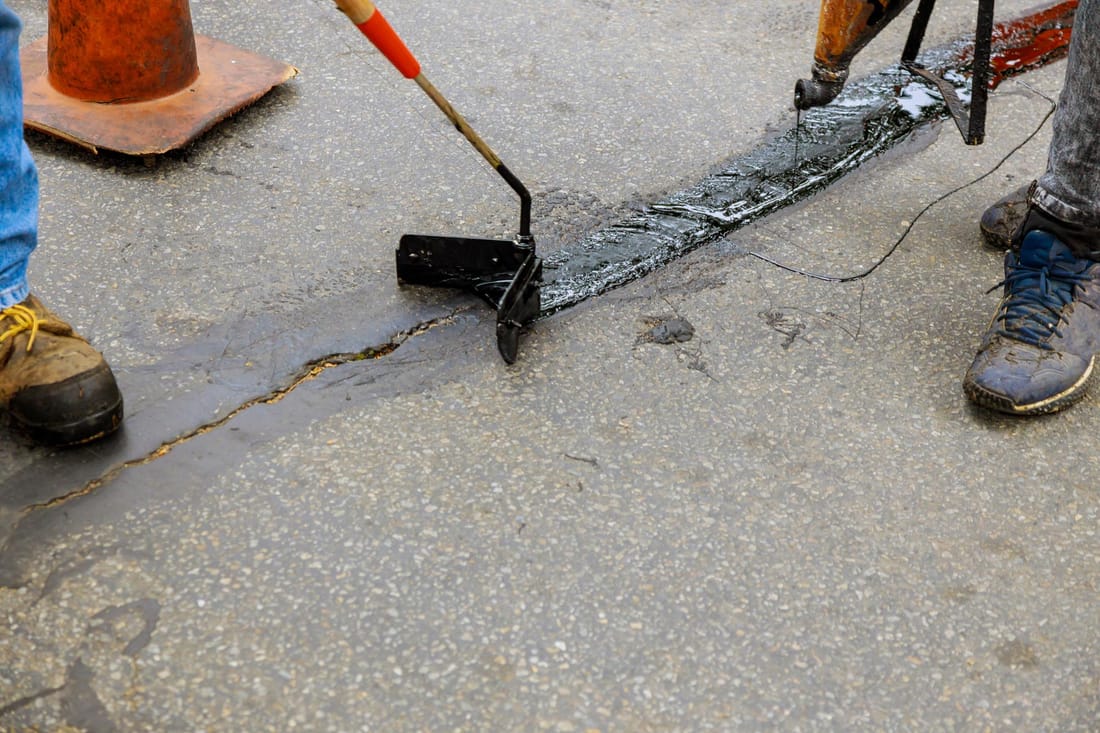
Each repairable crack is cleaned out with high-pressure air or wire brushing to remove dirt, vegetation, and loose asphalt. If needed, we route larger working cracks to create a uniform reservoir so the material can flex with movement. On active cracks and heavier traffic areas, we use a hot-pour rubberized crack sealant heated in a direct-fire or oil-jacketed melter to the manufacturer’s specified temperature. This allows the material to bond to the crack walls and stretch with Jacksonville’s temperature swings.
For residential driveways with occasional narrow cracks, we may use a cold-pour crack filler if the conditions are right and budget is tight, but we are very clear about the difference in life expectancy compared to hot rubber. After filling, we band the crack surface to create a slightly wider, flush repair that sheds water. Once the crack seal has skinned over, we proceed with sealcoating so the final surface looks uniform.
Handled this way, crack filling stops water from entering and slows down the spread of damage. It is far cheaper to fill early than to rebuild failed sections of pavement later.
What Drives Cost and Scheduling in Jacksonville
No two sealcoating jobs are priced the same. Precision Asphalt Jacksonville builds each proposal around actual site conditions and your operational needs, not a flat price per square foot pulled from a chart.
The main cost drivers are:
• Total square footage and layout. Wide open lots are more efficient to seal than tight, cut-up areas with islands or heavy edging.
• Condition of existing asphalt. Heavily cracked, oxidized, or raveled surfaces need more prep, more crack filler, and often heavier sealer application.
• Access and phasing. Working around business hours, keeping fire lanes open, or phasing an apartment community lot to maintain resident parking all affect labor and setup time.
• Material type and number of coats. We specify the sealer product, solid content, and coat count in writing. Higher solid content and two-coat systems cost more but typically last longer.
In Jacksonville, rain timing is a major scheduling factor. During the wet season, we plan around afternoon storms and avoid starting work when radar shows a high chance of rain during curing. We would rather delay than risk wash-off or tracking that wastes your money.
For commercial properties inside Jacksonville city limits, you may have requirements tied to your site plan or development order related to striping, ADA access, and fire lane markings. If we are sealcoating and restriping, we review your current layout against ADA and local fire code marking basics and can recommend updates where needed.
Local Considerations: HOAs, Commercial Lots, and Florida Climate
Jacksonville neighborhoods and commercial properties often have rules that affect asphalt sealcoating work. Precision Asphalt Jacksonville deals with these every week and can help you avoid friction and rework.
HOAs and property managers commonly require:
• Notice to residents or tenants before driveway or parking closures.
• Approved sealer color and finish, usually standard black, and sometimes no sealcoating during specific months due to vacation or event schedules.
• Maintained or improved striping layout for guest spaces, fire lanes, and accessible parking.
We can provide job letters, maps showing phasing, and sample notifications to slip under doors or email to residents so everyone knows when to move vehicles and for how long.
Florida’s climate also affects how we work. High UV exposure means unsealed asphalt turns gray and brittle faster. Frequent heavy rain, especially in late afternoon, can wash uncured sealer off the surface or cause spotting. To manage this, we typically schedule sealcoating in the morning, watch radar closely, and avoid sealing if surface or overnight temperatures will drop below manufacturer recommendations.
We also pay attention to drainage and standing water. If water regularly ponds on your asphalt after storms, we may recommend minor leveling or patching to correct low spots. Sealer should not be applied in areas that stay wet, since it will not bond correctly.
What to Expect From Precision Asphalt Jacksonville
Before any work begins, we provide a written proposal that breaks out crack filling, patching if needed, sealcoating, and striping or marking. You see the material type, approximate coverage rates, and the number of coats included. This lets you compare our bid on more than just price per square foot.
On the day of service, our crew arrives in clearly marked trucks, walks the site again, and confirms access and phasing with you or your manager. We handle barricades and signage, but we rely on you to help communicate timing to residents, staff, or customers. For commercial jobs, we can work evenings or weekends to reduce disruption where practical.
After sealcoating and crack filling are complete, we do a joint walkthrough whenever possible. We point out any areas that were patched instead of sealed, explain dry times, and discuss realistic expectations for appearance and life. New sealer may look uneven for a short time as it cures, especially on older, rougher asphalt. We let you know what is normal and what would be a concern.
Good maintenance does not end with one visit. In Jacksonville, most properties benefit from sealcoating every 3 to 5 years depending on traffic, sun exposure, and previous care. We can put you on a reminder schedule so you can budget ahead instead of reacting to failures.
If you want straightforward advice on whether your pavement is ready for asphalt sealcoating and crack filling or needs heavier repair, Precision Asphalt Jacksonville will tell you plainly, with photos and clear options, before you spend a dollar.