Home › Gravel-to-Asphalt Conversions
Tired of ruts and dust from your gravel drive? Our gravel to asphalt driveway conversions in Jacksonville, FL turn loose stone surfaces into smooth, low maintenance blacktop. We regrade, compact a proper base, and pave a durable asphalt surface that is easier to drive on and looks more polished in any neighborhood.
Precision Asphalt Jacksonville provides professional gravel to asphalt driveway throughout Jacksonville, FL, Florida and the surrounding area. Our licensed, insured crew delivers safe, clean, on-time work with a free estimate before anything begins. Call (904) 817-0896 or request your free quote.
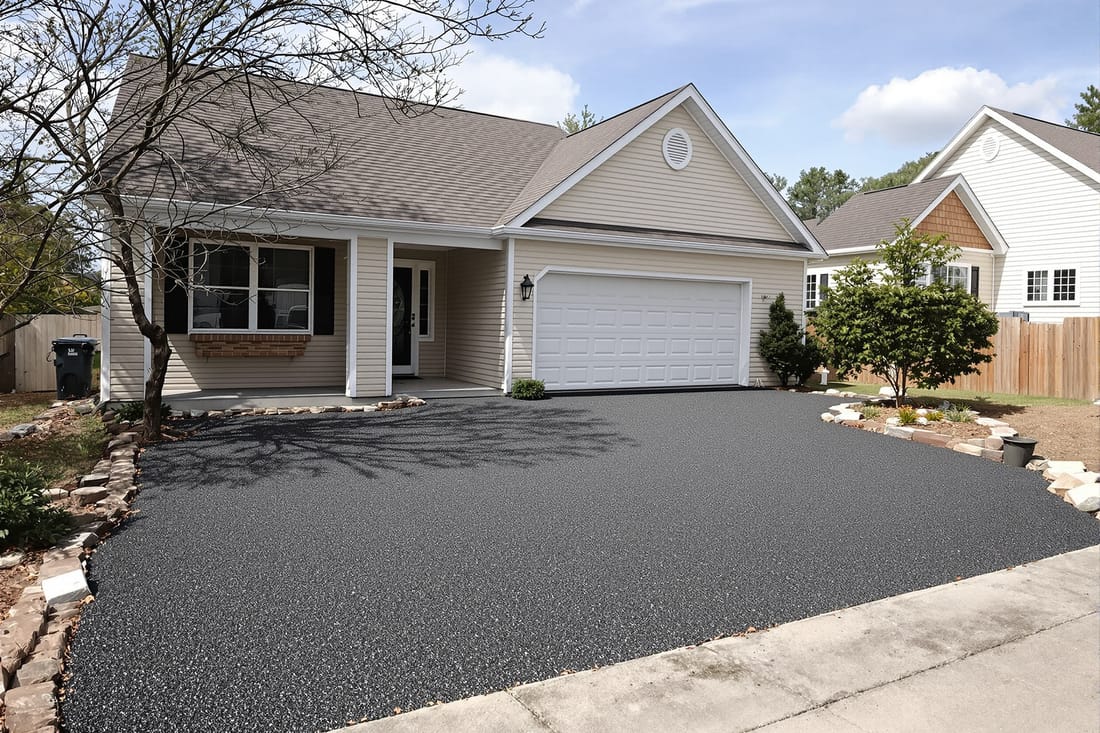
Turn Your Gravel Driveway Into a Smooth Asphalt Surface
If you are tired of ruts, dust, and washouts, converting a gravel drive to asphalt is one of the biggest upgrades you can make to your property. Precision Asphalt Jacksonville focuses on gravel-to-asphalt driveway projects in and around Jacksonville, so we design each job around local soil conditions, heavy summer rain, and year round heat.
A proper conversion does not just mean throwing asphalt over stone. We start by looking at how your current driveway behaves when it rains. Do you see standing water, soft spots, or areas that always wash out? Those problem spots tell us what the new asphalt will do if we do not fix the base and drainage. Our crews measure the driveway width, slope, and traffic pattern (cars, trucks, boats, RVs) so we can recommend the right pavement thickness and layout for Northeast Florida use.
Most Jacksonville gravel driveways have a usable stone base, but not all. We dig test points to confirm the depth and quality of the existing rock and the type of soil underneath. Our sandy coastal soils drain fast but can shift, and low lying areas with clay pockets hold water. The way we rebuild the base and the asphalt thickness we suggest depend heavily on what we see in these tests, along with how often you drive and park on the surface.
How We Convert a Gravel Driveway to Asphalt, Step by Step
Every gravel-to-asphalt driveway that Precision Asphalt Jacksonville builds follows a clear sequence of work so the pavement holds up in our climate.
1. Site evaluation and layout. We meet you on site, mark the exact driveway footprint, talk through where water currently flows, and decide if we need swales, shallow ditches, or small adjustments to slope to steer water away from garages, walkways, and entry doors.
2. Grading and reshaping. Our equipment spreads, cuts, and regrades the existing gravel to establish a consistent slope, typically a minimum of 1 to 2 percent fall so water sheds from the center of the drive toward the sides. We take extra care at transitions to the street and at garage slabs so there is no lip that can trip you or catch a snow shovel if you ever travel up north.
3. Base repair or replacement. If your existing gravel base is thin, mixed with a lot of soil, or filled with organic material, we cut out the bad material and bring in new base rock. In Jacksonville we typically use graded aggregate base (GAB) or crushed concrete, compacted in layers to at least 95 percent density. This part is what keeps the asphalt from cracking and rutting in summer heat.
4. Tack coat and asphalt paving. Once the base is smooth and tight, we apply a tack coat where needed so the asphalt bonds to the base and to any existing pavement we might be tying into. For residential drives we usually install 2 to 3 inches of hot mix asphalt after compaction. Heavier traffic or RV parking areas may justify 3 to 4 inches. We place the mix while it is hot, then compact it with a steel drum roller and edge compactors so the sides do not crumble.
5. Finishing, joint sealing, and cleanup. At tie in points to the street, sidewalks, or older asphalt, we create smooth transitions and seal the joints so water does not creep under the new mat. We shape the shoulders with soil or rock so the edge of the new driveway is supported. Then we clean up loose gravel and debris so you are not tracking it onto the new asphalt.
Asphalt Mix Options, Thickness, and Design Choices
Gravel-to-asphalt driveway work leaves room for a few decisions that affect both cost and performance. Precision Asphalt Jacksonville walks you through these options before we schedule the job so there are no surprises.
Asphalt mix: For most Jacksonville homes we recommend a dense graded hot mix designed for local DOT use because it stands up to our high temperatures and heavy summer storms. Coarser mixes handle turning movements better, which matters for tight driveways or turnarounds, while slightly finer surface mixes give a smoother, more finished look by the street or in front of a garage.
Thickness: A light driveway that sees only passenger cars can perform well with about 2 inches of compacted asphalt over a solid base. If you have work trucks, delivery vans, or an RV, 3 inches or more is safer. Instead of guessing, we ask about what will be parked there and size the section accordingly.
Borders and layout: Some customers like a simple asphalt strip that follows the existing gravel. Others take the conversion as a chance to widen parking pads, add a hammerhead turn, or create a defined apron at the road. We can leave a compacted gravel shoulder for drainage or bring the asphalt full width to a lawn edge. On larger properties, striping is usually not needed, but we do plan for clear turning space so guests are not cutting corners onto the grass.
Drainage details: Jacksonville’s summer rains can dump several inches of water in an hour. A gravel driveway might soak that up, but asphalt will shed it. We often add small swales, pipe extensions, or catch basins at the same time as the conversion so the new hard surface does not push water toward your house or neighbor’s yard. These details are part of the design, not an afterthought.
What Affects Cost and Timeline for a Gravel to Asphalt Driveway
Homeowners usually want to know fast what a gravel-to-asphalt driveway will cost. The reality is that two driveways that look similar from the street can be very different once we start digging, which is why Precision Asphalt Jacksonville spends time on the base and drainage evaluation.
Key cost drivers include:
• Base condition and depth. If your gravel is already 6 to 8 inches deep and drains well, we may only need minor reshaping and compaction, which keeps costs down. If we find thin gravel over soft soil or old organic fill, we will need to excavate and bring in new base rock, which adds time and material.
• Driveway size and shape. Long narrow drives often cost less per square foot than short, irregular shapes that require more handwork and edge work. Tight areas where machines cannot maneuver can increase labor.
• Access and tie ins. If we have easy access for trucks and rollers, production is faster. If the driveway is behind a house or squeezed between structures, we may need smaller equipment and more time. Tying into a city street, culvert, or existing concrete apron can also add detail work.
Weather and timing in Jacksonville matter too. Asphalt plants operate most days, but heavy rain or a saturated base will delay paving. We can often complete a typical residential conversion in one to two days of on site work once the weather cooperates. We schedule around our wet season as much as possible, and if we see a tropical system in the forecast we will push paving to protect your investment.
We provide firm written quotes that spell out base work, asphalt thickness, and any drainage improvements so you can compare apples to apples if you are talking to more than one contractor.
Aftercare, Maintenance, and What To Ask Before You Hire
A newly paved gravel-to-asphalt driveway needs a little care in the first few months to maximize its life. Precision Asphalt Jacksonville explains the do’s and don’ts at the end of each job so you know what to expect.
In our heat, the surface takes a few days to start hardening and several months to fully cure. We normally suggest keeping heavy vehicles off for at least 3 days and avoiding sharp turning in one spot for a few weeks. Do not place motorcycle kickstands, trailer jacks, or heavy posts directly on fresh asphalt without a board under them, especially in summer afternoons.
Routine maintenance is simple. Keep edges supported with soil or stone so they do not break away. Sweep or blow off leaves and sand so they do not hold moisture. Sealcoating is not required right away, but a quality sealcoat after the first year can help resist oxidation and surface wear, especially under strong Florida sun. Cracks that eventually form from age or tree roots should be cleaned and filled early to keep water out of the base.
Before you hire any contractor for a gravel to asphalt driveway, ask these questions:
• How will you evaluate and repair the base, and what compaction standard do you use?
• What asphalt thickness are you quoting after compaction, and what mix design will you use for Jacksonville conditions?
• How will you handle drainage and water flow so the new surface does not create runoff problems?
A company that gives vague answers on base work, thickness, or drainage is cutting corners on the parts of the job you cannot see. We are happy to walk you through our plan on site, show you problem areas, and explain why we recommend certain repairs for your specific property.